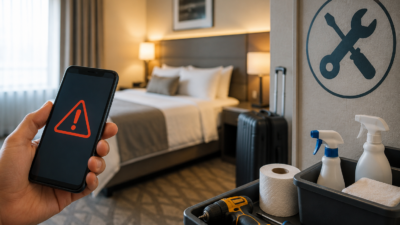

The guest from room number 4 will arrive later. The lamp in suite number 7 is not working. One booking is awaiting payment, and another guest has requested an invoice and an early breakfast.
The person finishing their shift knows all this information. The problem starts when it doesn't get passed on to the person taking over.
Some agreements are kept in private messages, some on a note at reception, and some only in an employee's memory. The next shift therefore starts the day with phone calls and searching for answers.
Good Handover of a change in an accommodation facility It doesn't need to be a long report. It should clearly indicate what happened, what still requires action, and who is responsible for the next step.
In summary: what should a shift handover include?
Before finishing work, you must first hand over:
- arrivals and departures requiring attention,
- Unregulated payments,
- guests' questions and requests,
- Room preparation status
- Reported faults,
- changes or cancellations to bookings
- tasks that have not been completed,
- the person responsible for further action.
There's no need to describe the entire day. The most important information is what affects the next shift or the service for a specific guest.
Why is information lost between changes?
It's most often not about a lack of employee engagement. The problem is the lack of a single way of communicating information.
In small organisations communication often takes place via:
- Conversations at reception,
- Private messages
- group chats
- cards,
- Emails
- phone notes
- information saved for later.
Each of these methods can work as long as the number of matters is small. However, during the season, even a minor arrangement can get lost among new messages, phone calls, and booking changes.
The greatest risk arises when information has been conveyed, but it is not known:
- Has anyone read it?
- Was it done,
- Who looks after her?
- Is it still relevant?
Not all information needs to go to the next shift.
The handover of responsibility should not be a chronicle of the entire day.
There's no need to note that the guest collected the keys as planned, paid, and reported no issues. This information requires no further action.
First and foremost, outstanding matters must be conveyed.
| Type of information | Shall I transfer it? | Example |
|---|---|---|
| Task completed | Usually not | The guest received an invoice |
| Open task | Yes | The invoice should be sent in the morning |
| Change of plan | Yes | The guest will arrive after 10 PM. |
| Technical problem | Yes | The heating in the room isn't working. |
| Standard stay | Usually not | Guest checked in without remarks |
| Unusual request | Yes | Cot needed before 3:00 PM |
This keeps the message short and clear.
Simple shift handover chart
Every important matter can be described according to four points:
- What is the information about?
Booking, room, payment, message, or malfunction. - What is the current status?
What has already been done, and what is still missing? - What's the next step?
Call, send a message, check payment, block room. - Who is responsible?
Reception, owner, manager, cleaning staff or another specific person.
Example of vague communication
The guest in apartment 3 has a payment issue. We need to check.
It's unclear what the problem is, what's already been done, and who is supposed to handle it.
Example of good handover
Flat 3, arrival tomorrow. Deposit not yet confirmed. Reminder sent at 17:00. If payment is not received by 10:00, reception will contact the guest by telephone.
The second piece of information immediately shows the status and next step.
What to check before handing over a shift?
2. Arrivals and departures
Only mark stays that deviate from the standard plan.
These could be:
- late or early arrivals,
- late check-out
- no given arrival time
- Incomplete guest data,
- Self check-in
- Collection of keys needed in an unusual way.
The person taking over the shift should know straight away which patient requires extra attention.
2. Payments and documents
It is worth passing on information about bookings where:
- The deposit is missing.
- The payment needs to be checked.
- The remaining amount is collected on-site.
- The guest is expecting an invoice,
- There is missing data for the document.
- The payment requires clarification.
The same information "no payment" is insufficient. A deadline and method of response should also be specified.
3. Room and cleaning status
The calendar might show a free room, but the next shift needs to know if it's actually ready.
Among other things, it must be conveyed:
- rooms awaiting cleaning
- Rooms prepared for inspection
- change the order of cleaning,
- Late check-out
- missing equipment
- Special bed arrangement.
4. Faults and technical problems
Every fault should have a short description and a clear status.
Example:
Room 6 — bedside lamp not working. Reported to owner at 2 PM. Room is usable. Replacement scheduled for tomorrow after guest departure.
This means another person doesn't have to re-establish whether the issue has already been reported.
5. Open conversations with guests
Messages that require further response or action should be indicated.
This applies particularly to:
- complaint
- questions about changing the date,
- requests for additional equipment,
- left items,
- problems during your stay
- Late arrival arrangements.
Ready shift handover template
You can use a simple template:
Arrivals and departures
- Which guest requires additional attention?
- Are the arrival and departure times confirmed?
- Have the necessary instructions been sent?
Bookings and payments
- Which reservations are awaiting payment?
- Where is the data missing?
- Kto ma skontaktować się z gościem i kiedy?
Rooms
- Which rooms are ready?
- Which ones are waiting to be cleaned?
- Do any of the rooms have a fault?
Communication
- Which messages still require a reply?
- Are there any special guest requests?
- Was anyone promised contact by a specific deadline?
Open-ended tasks
- What remains to be done?
- Who is responsible?
- By when should the task be completed?
How does mobile-calendar help organise shift handover?
The biggest problem when passing on a change is the scattering of information. The booking is in the calendar, arrangements are in a message, payment is in a separate place, and information about room preparation goes to another person by phone.
Mobile-calendar helps to base your daily work on one system PMSin which the team can check current bookings, arrivals, departures and availability.
Individual Employee accounts and appropriately matched permissions allow sharing only the information necessary for their work with individual people. Reception, the manager, and the person responsible for preparing rooms don't need to use one shared login.
Module communications It helps to link messages and findings to a specific stay. This allows another person to check what the previous conversation was about and whether the guest has already received a reply.
Notifications help catch new bookings, date changes, cancellations and upcoming stays. In turn, mobile application allows you to check the most important information even outside the reception.
The system does not replace conversations between employees. However, it may reduce situations where the entire process depends on one person's memory or information saved on a private phone.
The most common errors when handing over a shift
Passing on too much information
A long report makes it difficult to notice what's really important. One should focus on deviations, problems, and open tasks.
No status
The information "guest requested an invoice" does not state whether the details have already been collected or who is to issue it.
No responsible person
A task assigned to "someone at reception" may not be completed. It is better to specify a particular person or shift.
Verbal agreements without written record
The conversation is useful, but the most important information should be written down in a place accessible to the next person.
Information across multiple channels
If some data is in PMS, some on a messenger, and some in a notebook, it's difficult to confirm which version is current.
Summary
A good handover doesn't involve recounting everything that happened during the day.
It should highlight outstanding issues requiring action: unusual arrivals, unconfirmed payments, unready rooms, faults, special requests, and messages awaiting a response.
Every piece of information should have a status, next step, and responsible person.
This means the next shift doesn't start work by looking for information. They immediately know what's most important and what they should address first.
FAQ
How long should a handover take?
In a small establishment, 5–10 minutes is usually sufficient if information is recorded promptly and concerns only matters requiring further action.
Should the handover be in writing?
It is important to note down key information, even if employees are talking to each other in person. This allows you to check the status of a matter later.
What information is most important?
Unusual arrivals and departures, open payments, room statuses, malfunctions, special requests, and messages requiring a response.
Do you need to pass on all information about the guest?
No. Only data necessary for completing the task should be transmitted, adhering to security principles and appropriate access levels.
What to do if an object doesn't work shift-wise?
The same process is useful when one person is replaced by another, the staff work on different days, or some tasks are carried out by external personnel.